BrainFood
Coming to the App Store

A meal tracker for mental clarity

Some days you feel sharp. Other days, fog rolls in by 2 PM.

Photograph each meal. Thirty minutes later, rate how clear your head feels. Do it for a couple of weeks and the foods that make you sharp pull away from the ones that don't. The method has fifty years of practice behind it and a 2008 study showing it works better than a written food diary.

Built for knowledge workers, biohackers, and anyone tired of guessing why they crashed at three.

9:41
Today
Tue · May 12
oats + berries
7:42 AM
🙂 focused
coffee, no milk
10:15 AM
😄 energetic
rice bowl, chicken
12:50 PM
😐 foggy
pending check-in
3:30 PM
tap to log

How it works

1

Photograph it first

Snap a photo before each meal. Camera, photo library, or just type the name if you didn't manage a photo. Framing the meal before you eat is part of what makes this work.

2

Wait thirty minutes

A reminder fires once your body has started responding. Glucose, insulin, and alertness all shift inside the first hour after eating, so the signal is strongest then.

3

Log how you feel

Focused, foggy, sleepy, energetic. Five-second tap on emojis and a few chips. Add a note if anything stood out.

4

Read the pattern

After a week your sharpest meals start clustering. After a month you'll know your own answer better than any diet book could give you.

The science

BrainFood is built on a small, well-studied intervention: photograph the meal before you eat it. The mechanism has been measured.

Where this comes from

Photographing your food to understand your body is not a new idea. It is a fifty-year-old practice with a small canon of people who have done it seriously. BrainFood is mostly carrying their work forward.
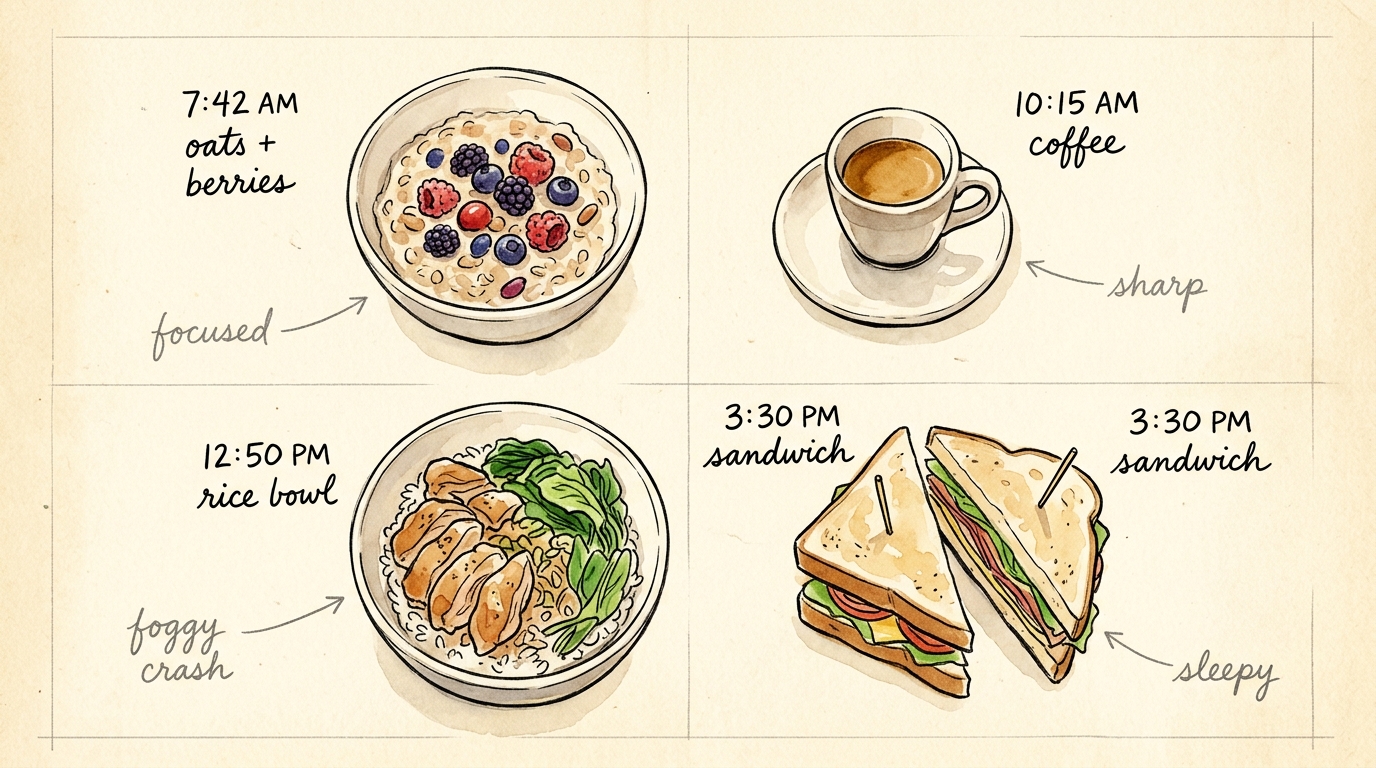
Hand-drawn food diary page with four meals — oats and berries, espresso, rice bowl, sandwich — labeled with times and mood notes in cursive: focused, sharp, foggy crash, sleepy.

Yoshiro Nakamatsu

A Japanese inventor. In 1972, at age 42, he started photographing every meal he ate to analyze the impact of food on his brain function. He is still doing it at 97. In 2005 he was awarded an Ig Nobel Prize in Nutrition for the methodology. BrainFood is mostly his experiment, in everyone's pocket.

Itsuo Kobayashi

A Japanese artist who has drawn every meal he's eaten since the 1980s. Ink, watercolor, handwritten labels, prices, his felt response to each dish. Thirty-plus years of pages. He shows that the practice produces more than data. It produces memory.

Lydia Zepeda & David Deal

Researchers at the University of Wisconsin–Madison. Their 2008 study showed that photographing food before eating works as an immediate behavior intervention and outperforms written food diaries. One participant put it this way: "I was less likely to have a jumbo bag of M&Ms. It curbed my choices."

Tim Ferriss

Popularized the practice in The 4-Hour Body (2010) by citing the Zepeda study and giving the method a name in mainstream culture. He framed it as a simple rule: photograph the meal before the first bite.

From my desk

For years I noticed my afternoons. Some days I'd write all the way through three o'clock. Other days fog rolled in by two and the rest of the day was lost.

I could never tell what was different. Lunch? Breakfast? Sleep? Caffeine? Too many variables, too many overlapping days. By Friday I'd forgotten what Monday felt like.

Photo: foggy afternoon assets/desk-fog.jpg

So I started photographing every meal, then setting a thirty-minute timer. When the timer fired, I'd jot down a number and a couple of words for how I felt. Nothing more.

After two weeks I had something I'd never had before. Not a diet plan. A pattern.

Photo: notebook + iPhone assets/desk-clear.jpg

This page was written sharp. Oatmeal and black coffee.